Peter Tsung Kei Wong 王棕琦, BA, MPhil, CUHK; PhD, Princeton
Presidential Assistant Professor, City University of Hong Kong
Junior Research Fellow, Trinity College, Cambridge
Peter.Wong@cityu.edu.hk / tkw33@cam.ac.uk
_______________________________________
My research explores the interaction between book production, classical scholarship, historiography, poetry, philosophy, and political culture in early China. I am presently working on a trilogy that offers a new history of the co-emergence and co-evolution of book culture, early empires, and classical studies in China from the third to the first century BCE. I also have general interests in the history of reading, the history of scholarly practices in the humanities and sciences, and the history of universities.
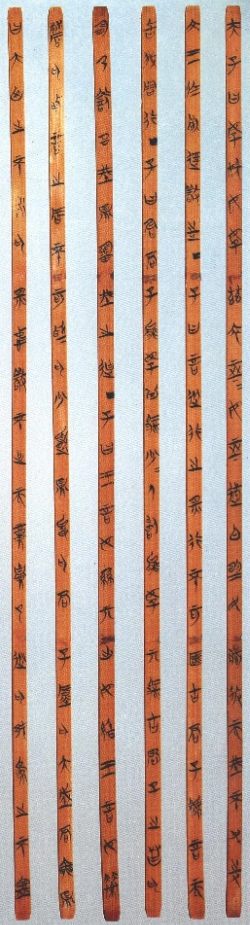
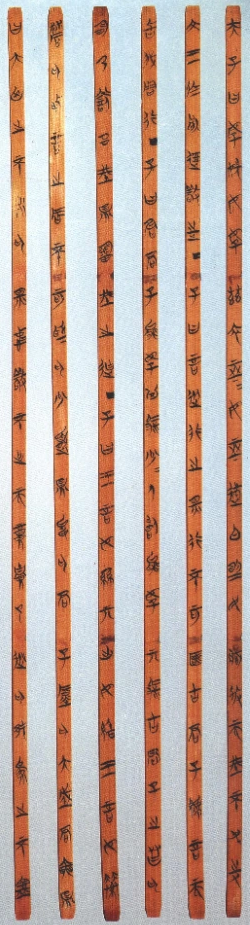
The first volume is tentatively titled The Big Book Theory: The Unlikely Rise of Long Books and Its Consequences in Ancient China. The multi-chapter big book as a textual form is so firmly established in our imagination that its prominence seems natural, timeless, and universal. Indeed, in ancient Greece, voluminous literary works, such as Herodotus’ Histories, were already prevalent by the fifth century BCE. But the big book was a latecomer and a rare species in ancient China. For centuries, Chinese writers, philosophers, and historians relied primarily on short, self-standing essays (pian 篇)—each generally under two thousand words and written on bamboo strips sewn together like a sushi mat—without dissatisfaction. What, then, motivated the merchant Lü Buwei (291–235 BCE) to compile a numerologically structured, 100,000‑word book on the eve of Qin’s unification of China? What challenges did one encounter when producing the first big book with an inexperienced team? And how did one persuade an audience long accustomed to short essays that an unprecedentedly long book—distributed across numerous scrolls—formed a coherent system greater than the sum of its parts, rather than a set of unrelated essays? Above all, what new opportunities, mentalities, worldviews, and experiences arose from the exponential expansion of textual space?
The Big Book Theory traces how, from 239 to 26 BCE, the belated and unlikely emergence of the big book in China sparked a big bang, fostering a think-big sensibility instrumental to the rise of the first unified empire in China and transforming Chinese textual culture, historiography, philosophy, and classical learning. This project has been recognized with the Charlotte Elizabeth Procter Honorific Fellowship from Princeton University, the 2024 Young Scholar Award from China Times Cultural Foundation, and a Research Fellowship from Trinity College, Cambridge.



My second project, A Tale of Two Rival Kingdoms: Localizing Early Chinese Book Production and Classical Learning, reconstructs an intellectual rivalry in the 140s BCE between two local kings, which resulted in the production of two massive books and a constellation of companion classical and philosophical anthologies. This half-forgotten contest, I argue, prompted Emperor Wu of Han to comprehensively institutionalize classical studies at court in 136 BCE as a means of asserting the intellectual authority of the empire. Moreover, this bookish battle popularized the big book as a textual form in the Han empire, ultimately inspiring Sima Qian (ca. 145–ca. 86 BCE)—the “father of Chinese history”—to compose the Records of the Grand Historian, a universal history of unprecedented length and scope.
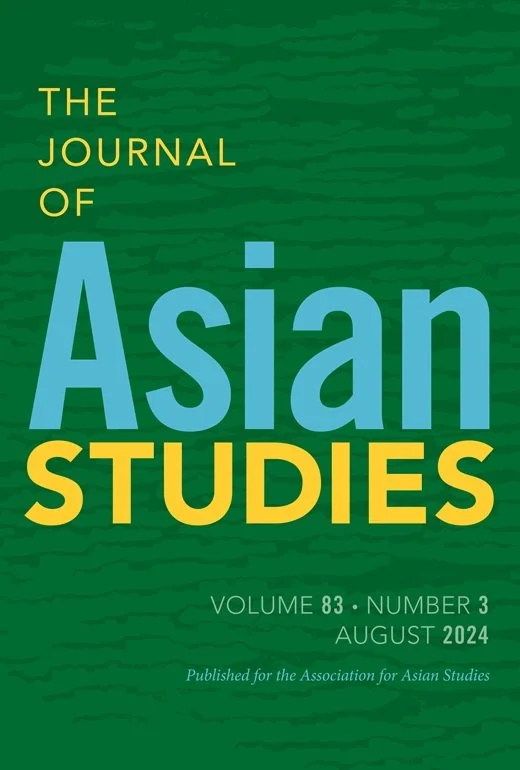
The third volume, Beyond Confucius: How a Usurper Reinvented the Classical Tradition and Political Culture of China, explores the outsized yet often overlooked legacies of Wang Mang (45 BCE - 23 CE), the most notorious, bookish, and successful usurper in premodern China, whose impact spanned two millennia. Some preliminary findings were presented at the annual meeting of the Society for the Study of Early China in June 2022 and in an article titled “Inventing the Spring and Autumn Period: How Numerology Shaped History and Historiography in Ancient China (2024),” published in Journal of Asian Studies.
Other works in progress investigate the history, philosophy, and aesthetics of text segmentation—with a focus on the evolving concept of pian 篇 (chapter-length essays) in early China—as well as the history of scholarly peer review in early modern and modern China.
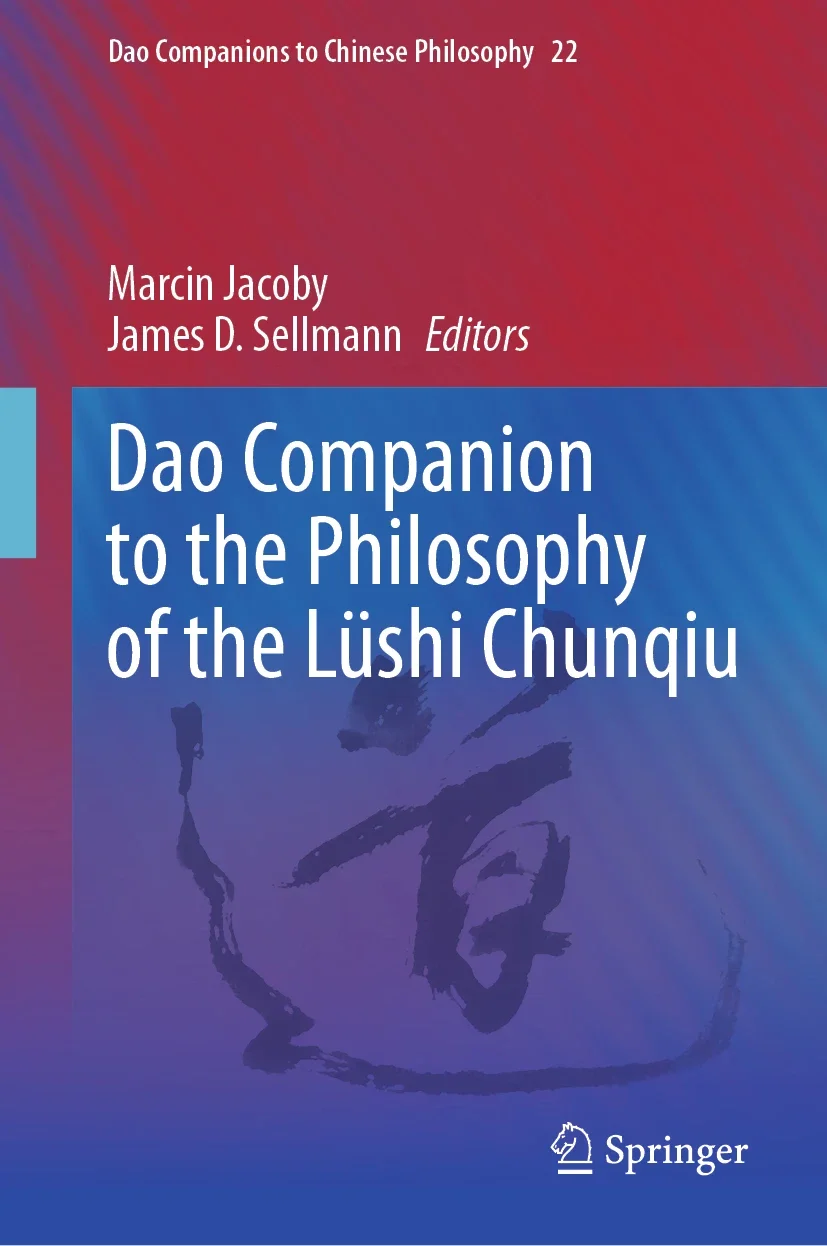
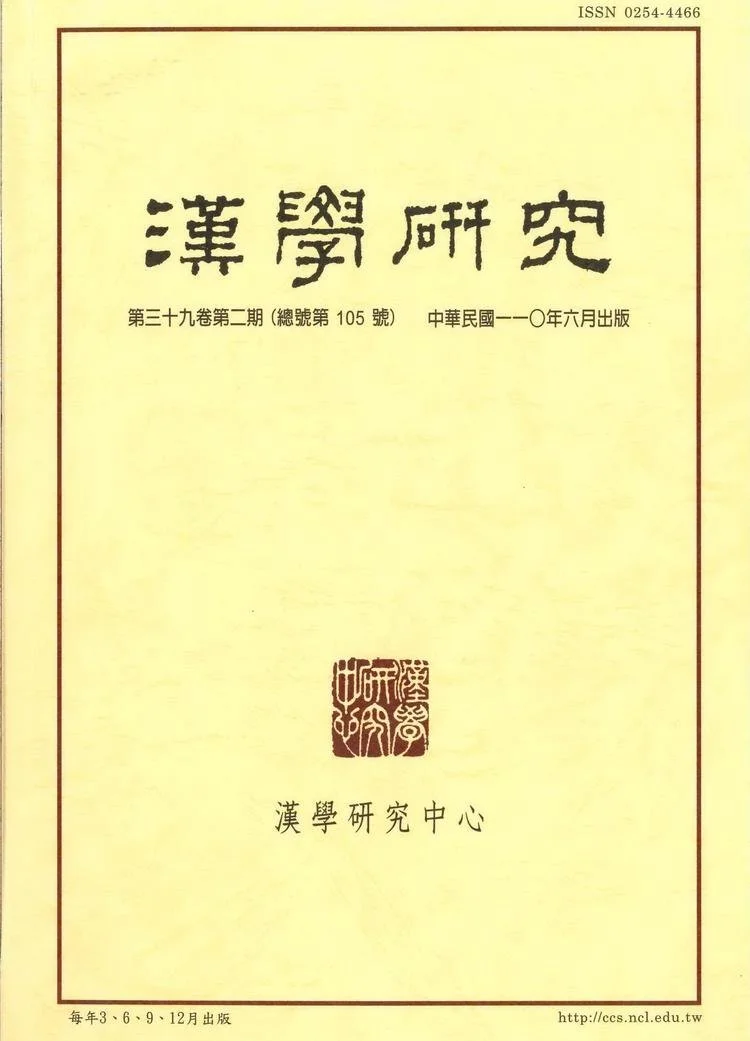
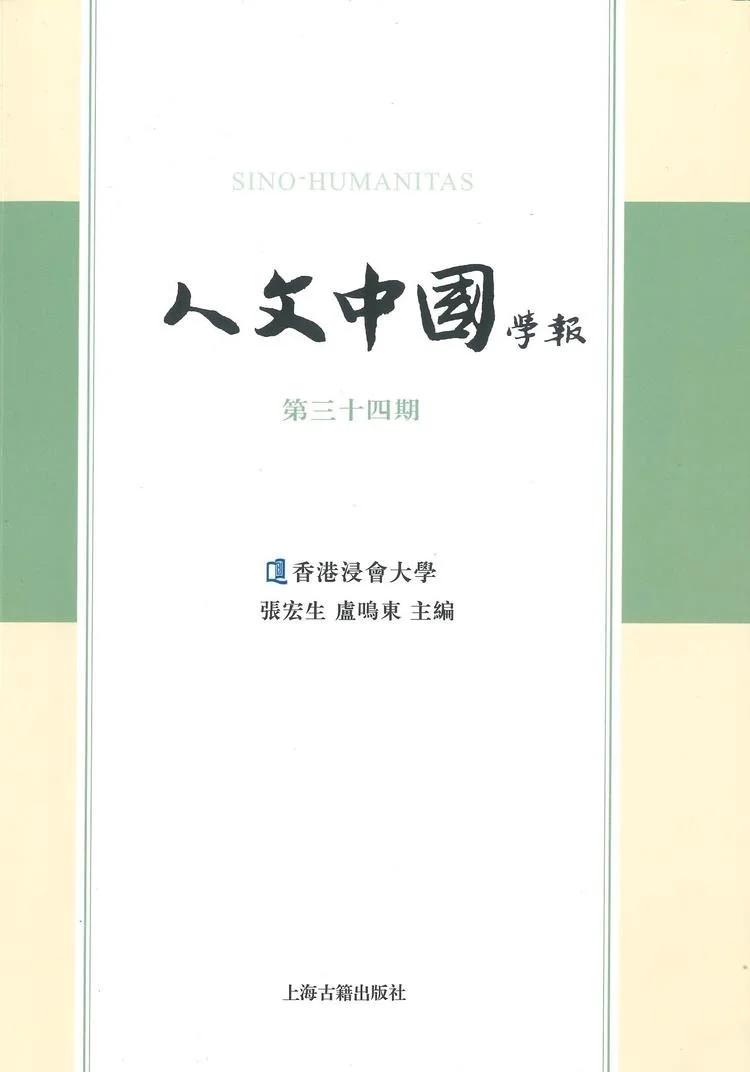
My writings have appeared (or are forthcoming) in Journal of Asian Studies, Early China, The Oxford Handbook of Daoism, Dao Companion to the Philosophy of the Lüshi Chunqiu, Dao Companion to the Philosophy of the Huainanzi, Chinese Studies 漢學研究 (Center for Chinese Studies), and Sino-Humanitas 人文中國學報. Recent publications include “Was It Easy to Create the First Big Bamboo Book?” (2026), “The Soundscape of the Huainanzi: Poetry, Performance, Philosophy, and Praxis in Early China” (2022), “What is the Nature of ‘the Unperturbed Mind-heart 不動心’ in Mencius 2A:2?” (2021), and "On the Compositional Structure of the Huainanzi” (2019).
I earned my PhD from Princeton University, where I was supervised by Professors Martin Kern and Anthony Grafton. Prior to that, I read Chinese classics at the Chinese University of Hong Kong.

My Writings
-
![LSCQ]()
Was It Easy to Create the First Big Bamboo Book? (2026)
-
![]()
Inventing the Spring and Autumn Period: How Numerology Shaped History and Historiography in Ancient China (2024)
-
![]()
The Soundscape of the Huainanzi: Poetry, Performance, Philosophy, and Praxis in Early China (2022)
-
![Cover of Chinese academic journal with Chinese text and ISSN 0254-4466. Features traditional seal and minimal design.]()
「不動心」的本質是甚麼?─《孟子》〈知言養氣章〉的文理與義理 (2021)
-
![Cover of Sino-Humanitas journal with Chinese text, issue number 34, published by Shanghai Classics Publishing House, featuring editors' names.]()
論「天民」「大人」之際:《孟子.盡心上.有事君人者》章新詮 (2022)